BestBookStop Reading Community
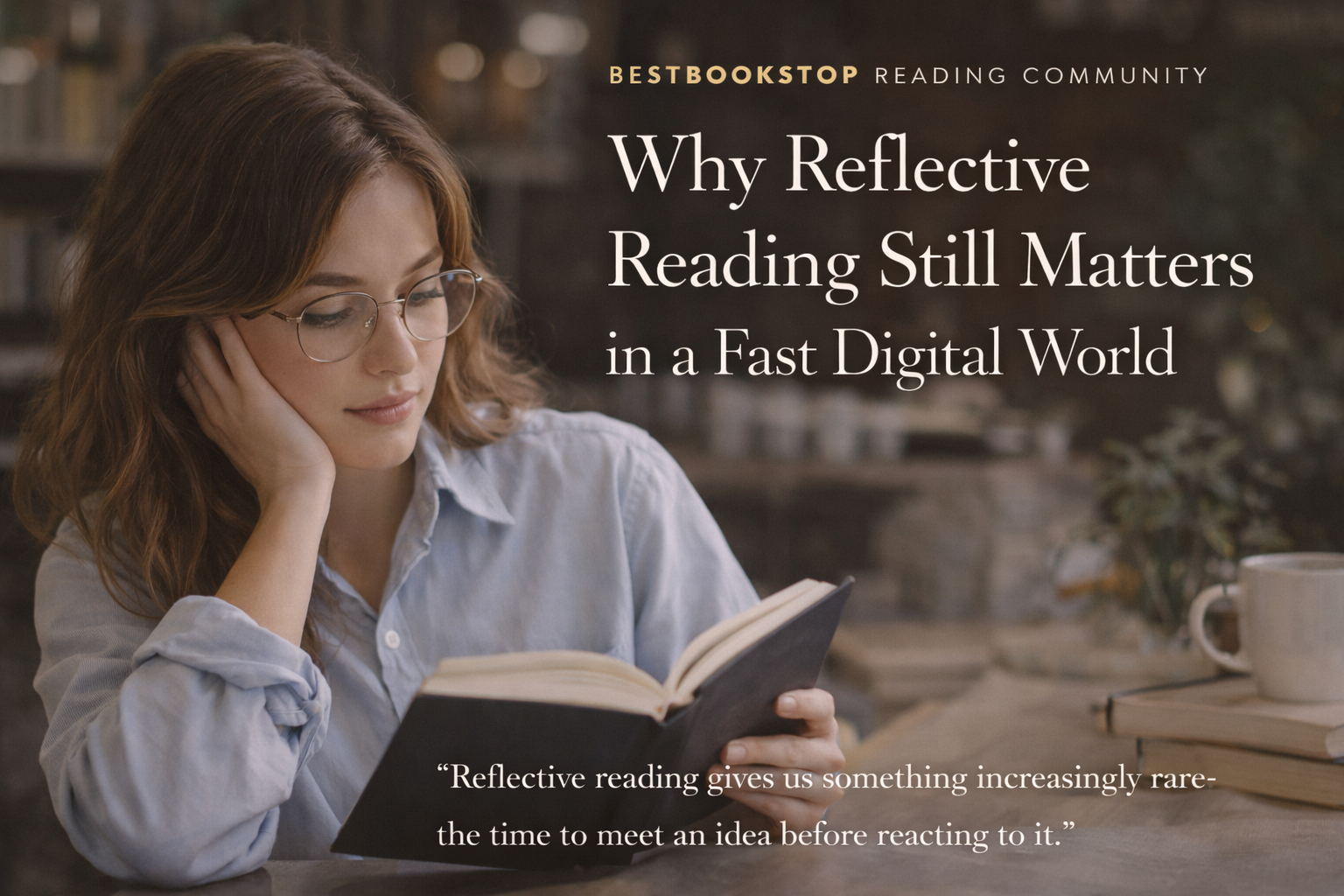
Why Reflective Reading Still Matters in a Fast Digital World
In a world built for speed, reading remains one of the few acts that still asks us to slow down enough to think.
Digital life trains attention toward immediacy. Notifications interrupt thought. Feeds reward quick response. Information arrives constantly and disappears just as fast. In that environment, reflective reading becomes more than a pastime. It becomes a form of resistance against fragmentation.
To read reflectively is to stay with an idea long enough for it to deepen. It is to let language unfold at its own pace. It is to pause, reconsider, underline, and return. This kind of reading does not only transfer information. It shapes thought. It gives the mind structure, patience, and nuance.
“Reflective reading gives us something increasingly rare: the time to meet an idea before reacting to it.”
Depth Over Noise
One of the most valuable qualities of books is that they ask more from us than quick consumption. They require sequence, attention, and emotional presence. Even when a book is light or accessible, it still invites continuity. You stay with the same voice. You move through an argument or story with patience. That has cognitive value, but also emotional value.
Reflective reading also helps restore interior life. It creates space for private thought that is not instantly converted into performance. Not every insight needs to become a post. Not every response needs to be immediate. Sometimes understanding grows quietly, and books are one of the few places that still allow that process to happen.
A Better Kind of Attention
Attention is one of the defining resources of modern life. Where we place it shapes not only what we know, but how we think and who we become. Reading reflectively teaches a better kind of attention: patient, layered, interpretive, and less reactive. It trains us to remain with complexity without fleeing into simplification.
That is why reflective reading still matters. It is not nostalgic. It is necessary. Books continue to offer a rare space where thought can breathe, meaning can gather, and readers can return to a more human pace of understanding.